HIV Window Period: When to Test After a Possible Exposure
The phrase “window period” can create more uncertainty than clarity. Here is the practical meaning: a test has a detection window, and the date of exposure helps a clinician decide what a result can and cannot tell you today.
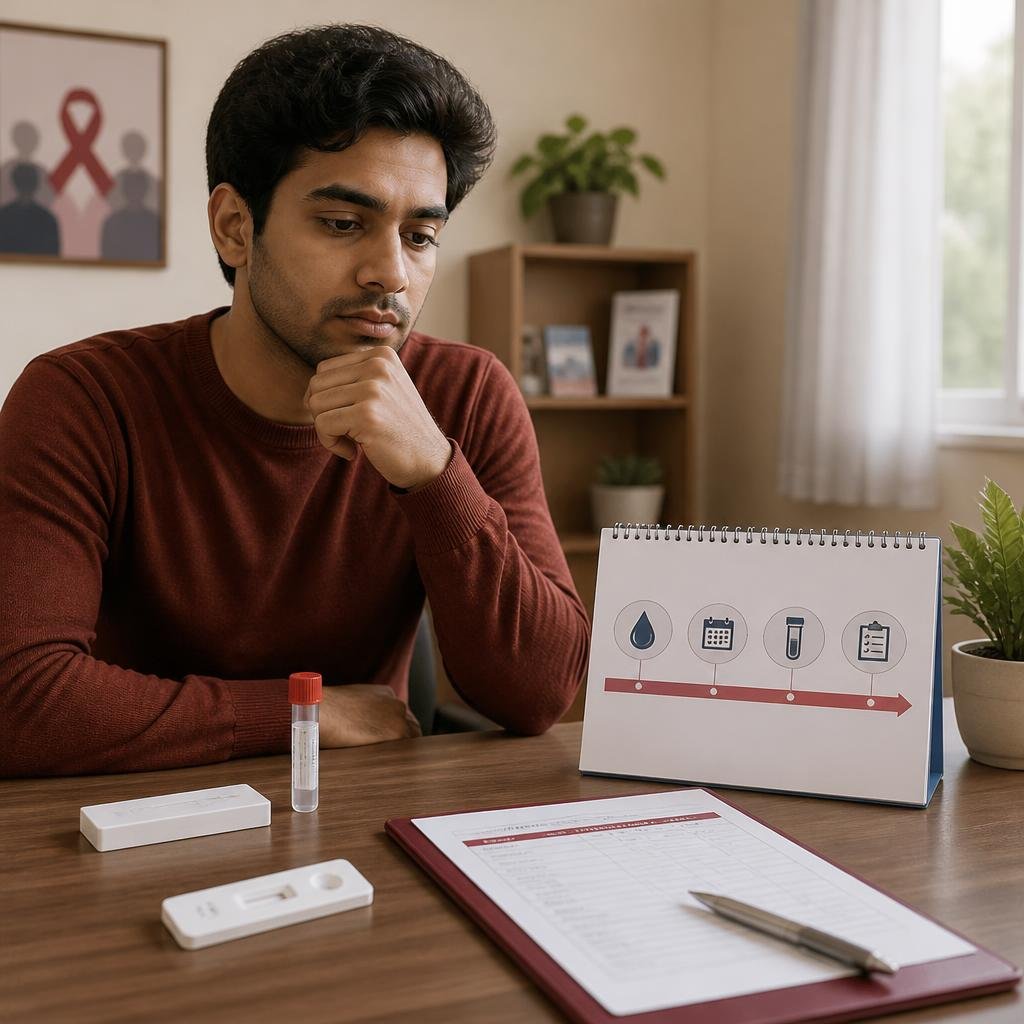
The HIV window period is the time after infection when a test may not yet detect HIV reliably. It differs by test type, timing and individual factors. A negative result soon after exposure may need repeat testing. A qualified clinician can match the test and follow-up plan to the exposure date.
Turn this guide into a care plan.
Share your city, timeline and broad concern. The call or WhatsApp message is handled as a consultation request; prescriptions and treatment decisions still require clinical assessment.
What does the HIV window period mean?
After HIV enters the body, it takes time for the markers measured by a test to reach detectable levels. Different tests look for different markers, such as antibodies, p24 antigen or viral genetic material. During this early period, a person may have HIV but receive a negative result because the test was taken too soon. That is why the test name, sample type and date matter more than a single internet table.
The window period is not a waiting period that is identical for everyone. Test performance, laboratory methods, the person’s immune response and medicines such as PEP or PrEP can influence the clinical plan. Ask the testing service which assay was used and when they consider a result conclusive for your situation.
Which HIV test should I take?
Laboratory antigen-antibody tests, antibody-only tests and nucleic-acid tests have different roles and availability. A clinician may recommend a laboratory blood test, a validated rapid test or another test based on how long ago the exposure happened. A rapid test can be useful, but a negative result during an early window may not settle a recent concern. Testing should follow the instructions of the service that performs it.
A reactive screening test needs confirmatory testing. Do not assume that a home result, a line on a rapid kit or a message from a friend is enough to diagnose HIV. If the test is reactive, stay connected with the testing provider and ask what confirmatory step is required. Support and counselling are part of responsible testing.
Make a simple timeline
- Exposure date and approximate time
- Test date, test name and sample type
- PEP, PrEP or other medicines taken
- Any later exposures that reset the risk discussion
- The date suggested for a repeat or confirmatory test
When should I test after sex or another exposure?
There is no single date that answers every exposure. A clinician considers the type of contact, whether there was blood or sexual-fluid exposure, the possible source status, protection, any PEP or PrEP, and the test used. A test performed now may provide useful information while a later test provides greater confidence. Follow the schedule given by your clinician or testing service rather than moving dates based on online anecdotes.
If the exposure was within 72 hours, do not delay the urgent question by waiting for the window period. PEP is an emergency prevention option that should be assessed as soon as possible and within 72 hours when clinically appropriate. Go to a qualified clinician or local emergency department; do not wait for a WhatsApp reply if it could delay care.
How to read a negative result responsibly
A negative result is reassuring only in the context of the test type and timing. If it was taken before the relevant detection window, ask whether repeat testing is needed. A new exposure after the test also changes the timeline. If you used PEP, ask the prescriber what follow-up testing is required and attend it even if you feel well.
Avoid repeatedly testing every day to calm anxiety; frequent early tests can add confusion without adding useful information. Make one clinician-guided plan, write it down and use support for the emotional part of waiting. Testing for other STIs may also be relevant because HIV and other infections can occur together or have different windows.
Preparing for a private testing discussion
Bring the report or kit details, the exposure timeline, medicines, allergies if known and the question you want answered. You can ask a clinician to explain what the result means, whether confirmation is needed and when the next test should occur. If you are in Delhi NCR, local testing and emergency options may be available; people elsewhere in India can use an appropriate local service or arrange a suitable online consultation for non-emergency guidance.
A webpage cannot tell you whether a specific result is conclusive. Testing and interpretation must be individualised by a qualified clinician. If you have a reactive result, seek confirmatory care promptly and do not panic or self-medicate.
Why dates and test names prevent confusion
People often remember that they tested “a few weeks later” but not the exact date or whether the test was an antibody test, an antigen-antibody laboratory assay or another method. That missing detail can make a clinician repeat questions and may lead to unnecessary testing. Save the report, the sample date and the name of the testing service. A clear timeline is more useful than a long list of symptoms.
If more than one exposure occurred, record each one separately. The latest event may determine follow-up even when an earlier test was negative. Likewise, if you started PEP or PrEP, note the first and last dose and any missed tablets. These medicines do not make a test unnecessary; they make professional timing advice more important.
A negative result is not a reason to ignore a new symptom, and a symptom is not a reason to label a negative test as wrong. Both pieces of information need context. The clinician may suggest a repeat HIV test, STI tests or a local examination. Follow the plan rather than moving between different online charts.
If anxiety is driving repeated tests, say so openly. Reassurance is part of care, but it is safest when built around one medically appropriate testing plan. A consultation can also address prevention for future exposures, including condoms, PrEP and what to do if a condom breaks.
How to keep the next step practical
A useful health article should leave you with a decision, not another dozen searches. Re-read the timeline, identify the one fact that could change care and write down the question you want answered. If the issue is a test, keep the test name and sample date. If it is treatment, keep the prescription and the last dose. If it is a symptom, note when it began and whether it is worsening. This small preparation makes a private consultation more focused and reduces the chance that anxiety hides the information a clinician needs.
It is also reasonable to ask what cannot be decided online. Some questions require a blood sample, a swab, an examination, a prescription review or urgent local care. A responsible clinician will explain that boundary rather than promise certainty from a message. You can still use online support to organise your history, understand a report, plan follow-up and decide where to go next. Accurate information, privacy and timely care are more useful than a perfect-sounding answer.
A practical checklist
- Write down the exposure date before booking a test.
- Ask which test was used and what its window means.
- Treat a reactive screening result as needing confirmation.
- Ask about repeat testing after a recent negative result or PEP.
- Seek PEP assessment urgently within 72 hours of a possible exposure.
Questions patients often ask
What is the HIV window period?
It is the time after infection when a test may not detect HIV reliably. The duration depends on the test and clinical context.
Can a negative HIV test be too early?
Yes. A negative result taken early after exposure may need repeat testing according to the test type and clinician’s plan.
Is a reactive rapid test a final diagnosis?
No. A reactive screening result requires confirmatory testing through an appropriate clinical pathway.
Medical information, not a diagnosis. This article is educational and cannot replace an examination, laboratory testing, diagnosis or prescription from a qualified clinician. Do not start, stop, change or share prescription medicine based on a webpage. For severe or rapidly worsening symptoms, seek local urgent care. For a possible HIV exposure within 72 hours, seek urgent PEP assessment and do not wait for an online reply if that could delay care.