HIV Test Negative but Still Worried? How to Read the Result Calmly
A negative HIV result should bring relief, yet many people keep worrying, keep searching symptoms and keep testing. This guide helps you check whether your result is final, what can still cause doubt and how to step out of the worry cycle.
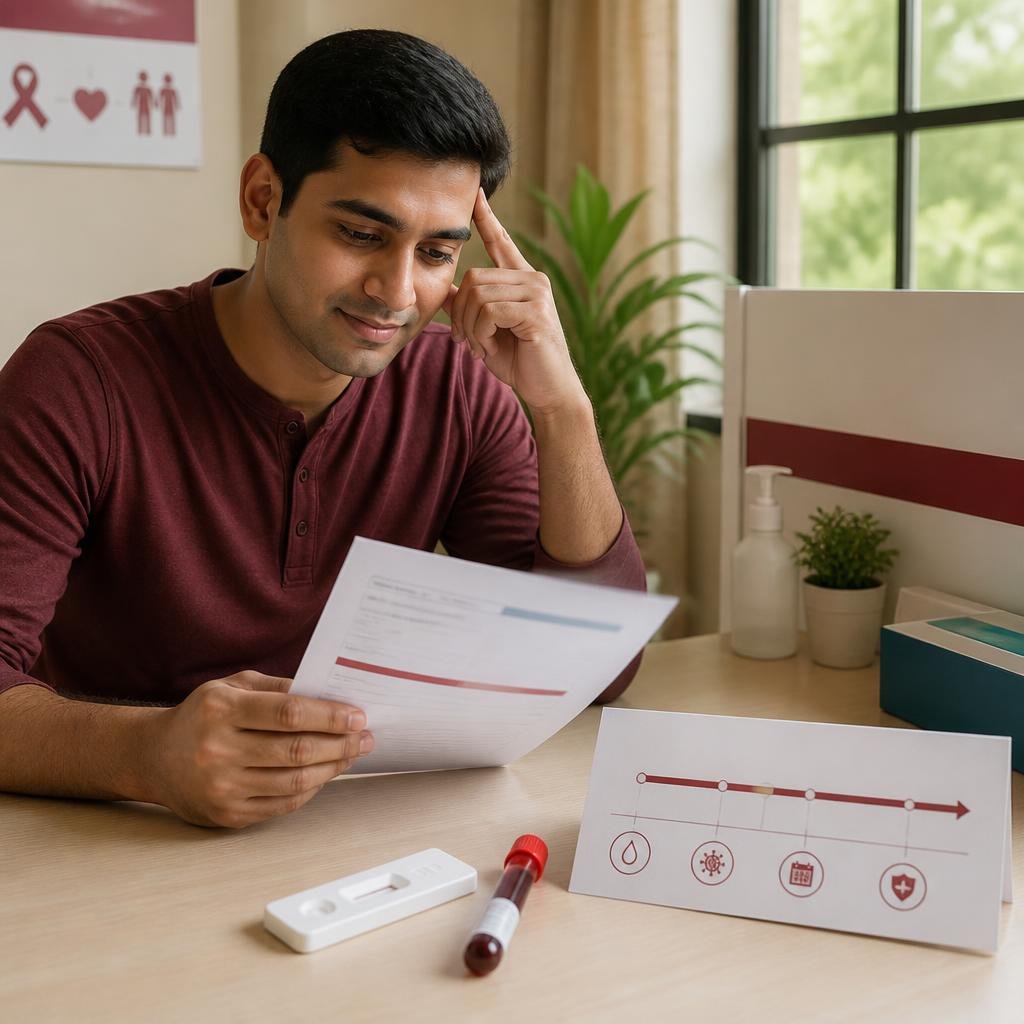
A negative HIV test is conclusive when it was taken after the test’s window period and there has been no new exposure since. For a laboratory 4th-generation test this is usually 6 weeks; for many rapid or antibody tests it is up to 3 months. If your test meets this rule, more tests will not add information. If worry continues, it is worth talking about the anxiety itself.
Find out if your negative result is final.
Share the test name, the test date and the exposure date. The doctor will tell you whether your result is conclusive or whether one repeat test is needed — and then you can stop testing. Online consultation fee: ₹2,000.
When is a negative HIV test final?
Two questions decide it: which test was done, and how many days after the exposure. A laboratory 4th-generation (antigen-antibody) test taken 6 weeks or more after exposure is usually conclusive. A rapid or antibody-only test is usually conclusive at 3 months. A nucleic-acid (RNA) test can detect infection earlier, but it is usually followed by an antibody-based test.
If your test was taken earlier than this, it is not wrong — it is just not yet final. One repeat test on the right date is usually enough. Your clinician may adjust these dates if you took PEP or PrEP, or if there was another exposure after the first.
Why worry can continue after a negative test
It is common to doubt a result when the exposure felt frightening, when guilt or secrecy is involved, or when the body produces symptoms such as fatigue, a sore throat or tingling. Stress itself causes many physical sensations. Searching online then shows the worst possibilities, which makes the worry stronger.
Sometimes the worry is a sign of health anxiety: repeated checking, repeated testing and needing reassurance that never lasts. This is real, common and treatable. Recognising it is not the same as ignoring your health — it means you deal with the result and the anxiety separately.
Is my negative result final?
- Note the name of the test you took
- Count the days from exposure to test
- Check for any new exposure since the test
- Notice if worry is affecting sleep or work
Symptoms after a negative test
Fever, rash, mouth ulcers, a white tongue, body aches or swollen glands are very common and have many causes. After a conclusive negative HIV test, these symptoms are not caused by HIV from that exposure. They may still deserve a check-up for their own sake, especially if they last more than two weeks.
Make a short note of the symptom, when it began and whether it is getting better or worse. Share this with a doctor once, rather than checking it every day. If a symptom is severe — such as breathlessness, confusion or a high fever that does not settle — seek local care promptly.
When a repeat test does make sense

A repeat test is useful if the first test was taken inside the window period, if you took PEP (follow-up tests are usually advised after the course), or if there has been a new exposure since. In each case, agree on one date and one test type with your clinician.
A repeat test does not make sense when a conclusive test is already done and nothing has changed. Testing every week will not change the answer. Keep the final report in a safe place, so you can look at it when the doubt returns instead of testing again.
What to do if there was a new exposure
A new exposure starts a new timeline. If it happened within the last 72 hours, ask a doctor or hospital emergency department about PEP today. Your old negative result does not cover this new event.
If the new exposure was more than 72 hours ago, plan a correctly timed test for it. Consider also testing for syphilis and other STDs, which have their own windows. If exposures happen regularly, ask about PrEP and condoms so that you do not keep returning to the same fear.
Handling HIV anxiety
Set a limit on searching — for example, no symptom searches for two weeks. Put your conclusive result where you can see it. When the worry comes back, remind yourself of the facts: the test type, the date and the result.
If worry is affecting your sleep, appetite, work or relationships, speak to a doctor or counsellor. Short-term counselling or cognitive behavioural therapy can help a lot. You can also call the National AIDS Helpline 1097 for free, confidential counselling.
A simple plan for the coming week
Day one: write the exposure date, test name, test date and result on one page. Day two: check whether the result meets the window period rule. If it does, the testing part is finished.
For the rest of the week, focus on the worry rather than the virus. Reduce searching, keep up normal routines and speak to someone you trust. If a repeat test is genuinely needed, book it for the exact date your clinician gives you, and do not test before that.
What to ask when you feel stuck
Is my result conclusive for this exposure? Do I need one more test, and on which date? Could my symptoms have another cause that needs a check-up? Would counselling help with the worry? These questions turn repeated doubt into a clear endpoint.
Bring the test report, the exposure date and any medicines you took. An online consultation is often enough to answer whether your result is final. It also gives you a chance to talk openly about the anxiety without judgement.
Negative result checklist
- Write the exposure date, test name and test date together.
- Check whether the test was done after its window period.
- Book one repeat test only if your clinician advises it.
- Avoid testing again when nothing has changed.
- Seek counselling if worry is affecting daily life.
- Ask about PEP urgently after any new exposure within 72 hours.
Negative HIV test: quick answers
Is a negative HIV test at 6 weeks final?
For a laboratory 4th-generation (antigen-antibody) test, a negative result at 6 weeks or later is usually conclusive if there has been no new exposure since. Rapid and antibody-only tests usually need 3 months. Your clinician may advise extra testing after PEP or PrEP.
Can symptoms mean HIV after a negative test?
No. HIV symptoms look like many common illnesses, and many people with HIV feel well. Only a correctly timed test can answer the question.
When should I get urgent care instead of testing again?
Seek urgent care for breathlessness, confusion, fainting, a high fever that does not settle or severe dehydration. Ask about PEP urgently if there was a new exposure in the last 72 hours.
Medical information, not a diagnosis. This guide explains negative HIV results in general. It cannot confirm that your own result is final. If anxiety is affecting sleep, work or relationships, talking to a doctor or counsellor helps. Ask about PEP urgently after any new exposure within 72 hours.