HIV Test Types Explained: Rapid, Fourth-Generation and PCR Tests
Rapid test, 4th-generation, ELISA, PCR, RNA — HIV test names can be confusing. This guide explains in plain words what each test looks for, how soon it works after an exposure and which one may suit your situation.
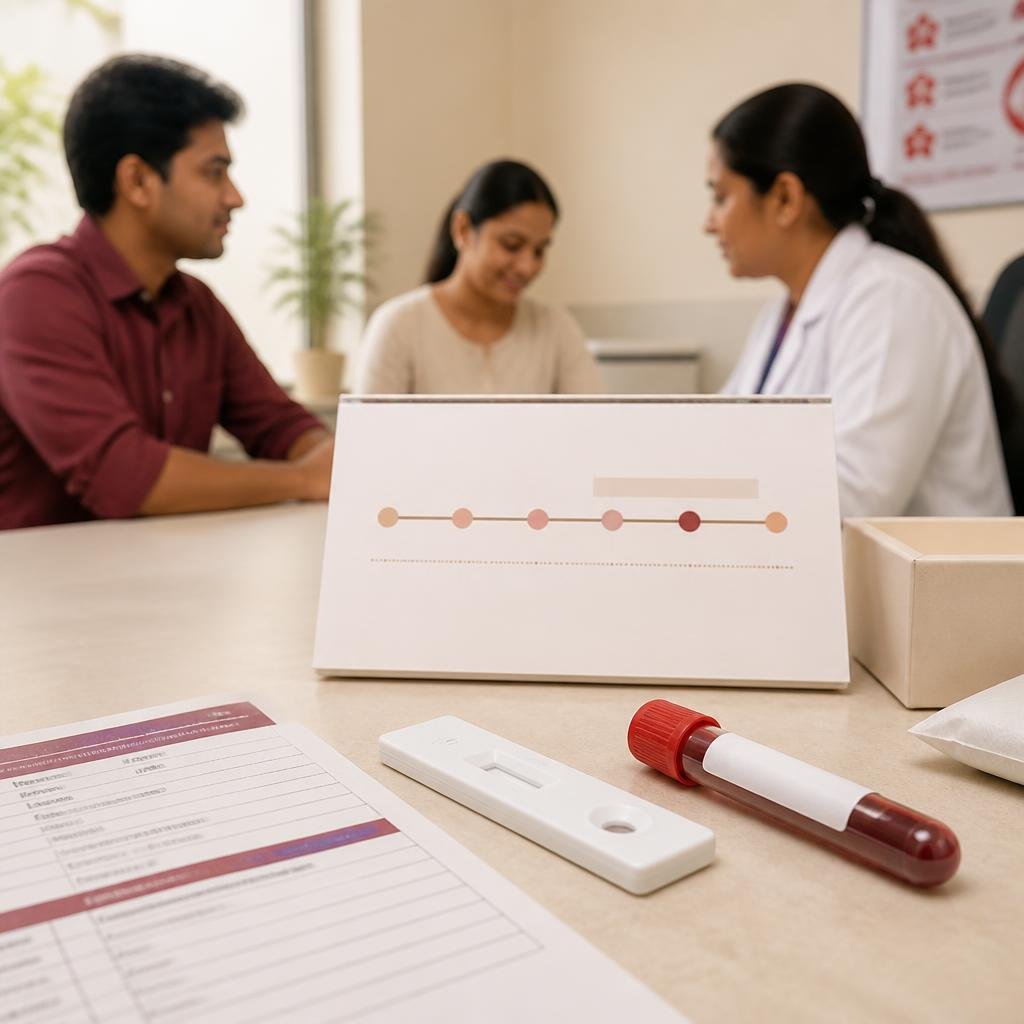
There are three main kinds of HIV test. Antibody tests (many rapid and older ELISA tests) are reliable from about 3 months. Laboratory 4th-generation antigen-antibody tests usually detect HIV from 18 to 45 days and are reliable at 6 weeks. Nucleic-acid tests (RNA PCR) can detect HIV from about 10 to 33 days. Your clinician picks the test based on the exposure date.
Get the right HIV test for your timeline.
Share the exposure date and any test you have done. The doctor will tell you whether a 4th-generation, rapid or PCR (RNA) test suits you now. Online consultation fee: ₹2,000.
The three main types of HIV test
Antibody tests look for antibodies your body makes against HIV. Rapid kits, oral-fluid self-tests and some older ELISA tests work this way. They are simple and widely available, but antibodies take time to form, so these tests have the longest window period — up to 90 days.
4th-generation tests look for both antibodies and the p24 antigen, a part of the virus that appears earlier. Done in a laboratory on blood from a vein, they detect most infections within 18 to 45 days. Nucleic-acid tests (NAT, also called HIV RNA PCR) look for the virus’s genetic material and can find it sooner, from about 10 to 33 days.
How soon each test works after an exposure
Every test has a window period — the time after infection when it cannot yet detect HIV reliably. As a general guide: nucleic-acid test about 10 to 33 days; laboratory 4th-generation test about 18 to 45 days; finger-prick rapid antigen-antibody test about 18 to 90 days; antibody-only tests about 23 to 90 days.
These ranges cover most people, not everyone. PEP or PrEP taken around the time of exposure can delay results, so your clinician may advise extra testing. A test done inside its window period is not wrong — it just may not be final yet.
Questions to ask when booking a test
- What is the exact name of this test?
- Is it done on vein blood, finger-prick or oral fluid?
- What is its window period?
- How will a reactive result be confirmed?
Is a PCR test better than a 4th-generation test?
Not always. An RNA PCR test can detect HIV earlier, which helps in selected situations such as a high-risk exposure with symptoms of early infection. But it costs more, and it is not usually the main screening test. A 4th-generation laboratory test at 6 weeks gives a reliable answer for most people.
HIV DNA PCR is a different test, mainly used to diagnose HIV in babies born to mothers living with HIV. Viral load is also an RNA test, but it is used to monitor people already on treatment rather than to screen for new infection.
How a positive (reactive) result is confirmed

No single screening test is enough for a diagnosis. In India, the NACO testing strategy uses more than one different test to confirm HIV. Older methods such as Western Blot are now rarely needed. A reactive result stays “reactive, needs confirmation” until this process is complete.
Keep the original printed report with the test name and sample date. If you go to another laboratory for confirmation, take it with you. Free confirmatory testing and counselling is available at government ICTC centres; the National AIDS Helpline 1097 can direct you.
Which test makes sense at your time point
Less than 72 hours after exposure: no test can show this infection yet — ask about PEP now. A baseline test may be done when PEP starts, but it only shows your status before this exposure.
About 2 to 6 weeks: a laboratory 4th-generation test or an RNA test may be useful, but a negative may need repeating. 6 weeks or more: a laboratory 4th-generation test is usually conclusive. 3 months or more: most test types, including rapid kits, give a conclusive answer.
Cost, privacy and where to test
Government ICTC centres offer free HIV testing with counselling. Private laboratories offer 4th-generation and PCR tests, many with home sample collection. Self-test kits give privacy, but they are antibody-based and need longer waiting.
Whichever option you choose, your result is confidential under the HIV and AIDS (Prevention and Control) Act, 2017, and testing needs your informed consent. Ask how and when you will receive the report, and keep a copy.
Picking your test in three steps
Count the days since the exposure. Match that number to the test windows above. Book the test that can give a reliable answer at that time, or note the date when it will.
If you have already taken a test, add its name and date to your notes. Many people find they do not need a new test at all — only the right final one. If the timeline is unclear, a short consultation can settle it.
What to ask before you pay for a test
Which test should I take now, and which later? Is my earlier test result final? Do I need tests for syphilis, hepatitis B or other STDs as well? How will a reactive result be confirmed? These questions help you avoid paying for tests you do not need.
Bring the exposure date, any test reports and a list of medicines, including PEP or PrEP. That information is usually enough for a doctor to recommend the right test and date.
Test choice checklist
- Count the days since the exposure.
- Ask for the test name and sample type.
- Match the test to its window period.
- Confirm a reactive result with laboratory tests.
- Keep printed reports with their sample dates.
- Ask about PEP first if the exposure was within 72 hours.
HIV test types: quick answers
Which HIV test is best after a possible exposure?
It depends on the time since exposure. A laboratory 4th-generation test is usually the best choice from 6 weeks onwards. An RNA test may be used earlier in selected cases. Within 72 hours, PEP assessment comes before testing.
Is ELISA the same as a 4th-generation test?
Not always. ELISA describes a laboratory method. Older ELISA tests detect only antibodies, while 4th-generation tests detect both antibodies and the p24 antigen. Ask the laboratory which generation its test is.
Can a PCR test give a final answer on its own?
An RNA test is useful for early detection, but a negative result is usually followed by a 4th-generation or antibody test at the right time. A detectable result needs confirmation through the standard testing strategy.
Medical information, not a diagnosis. Window periods given here are general ranges. Laboratories and kits differ, and your clinician may advise a different test date. A reactive result always needs confirmation. If the exposure happened within 72 hours, ask about PEP first.