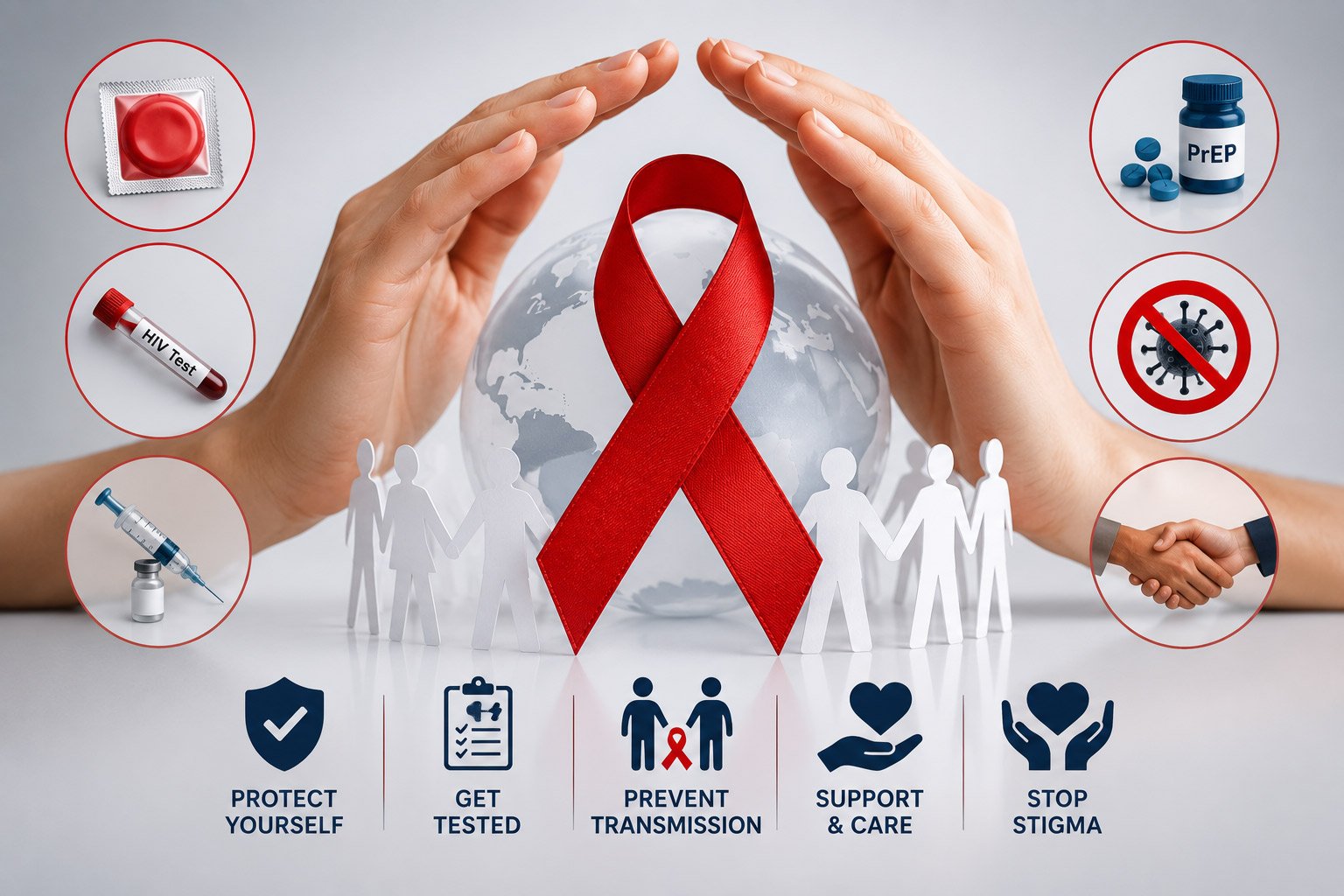
HIV care is built in ordinary days: taking ART safely, keeping appointments, protecting sexual health and asking for help early. Use this guide for clear next steps in Delhi NCR, across India or from abroad.
Education, not a replacement for examination or prescription. Do not start, stop or share medicine based only on a webpage.
Patient guideClear information for safer daily decisions — without judgement.
ART supports health. Lifestyle supports the plan.
The first safety rule
ART is the foundation. Habits are the support.
Take antiretroviral therapy exactly as prescribed and do not stop without guidance from your treating clinician. HIV medicines work as part of a consistent plan; the right medicine, timing and follow-up are personal decisions.
Nutrition, sleep, movement and stress care can help you feel stronger, but they do not remove HIV. No supplement, detox, herb or home remedy replaces ART or a medical review.
If a dose is missed or side effects appear: check the instructions for your prescribed medicine and contact your clinician or pharmacist. Do not take extra doses, change the schedule, share tablets or wait if symptoms are severe.
Your everyday checklist
What should daily HIV care include?
Keep the routine realistic. A small system that you can repeat is more useful than advice that adds guilt or confusion.
01 / MEDICINE
Make ART easier to remember.
Use a private reminder, pill organiser or routine that suits your life. Keep a small reserve plan for weekends, work travel and clinic holidays. Ask before combining ART with any new prescription, over-the-counter medicine or supplement.
02 / MONITORING
Read CD4 and viral load together.
Regular reviews help your clinician assess treatment response, immune health and other risks. Keep copies of recent reports and ask when your next viral-load, CD4 or other health check is due.
03 / WHOLE HEALTH
Protect sleep, food and movement.
Choose regular meals, hydration, restorative sleep and movement you can sustain. Discuss vaccination, blood pressure, diabetes, hepatitis, TB risk and other preventive checks with your clinician.
Reports and prevention
Monitoring turns worry into a question you can act on.
CD4 count describes one part of immune health. Viral load measures HIV in the blood and is interpreted with treatment history, timing and the laboratory report. A single result should not be read in isolation or used to change ART without a clinician.
Bring your latest reports, current ART names and doses, and the date of your last review.
Tell the clinician about missed doses, new medicines, supplements, infections or side effects.
Ask which vaccinations and routine checks fit your age, history, pregnancy plans and care plan.
Sexual health is healthcare
Safer sex, PrEP, PEP and STI testing are choices to discuss.
Condoms can reduce the risk of HIV and many STIs when used correctly and consistently. Testing decisions depend on the exposure, symptoms, partners, body sites involved and timing. A confidential clinician can help you choose an appropriate plan.
PEP: after a possible HIV exposure, ask urgently. It is time-sensitive within 72 hours; do not wait for symptoms or an online response.
PrEP: ongoing prevention may suit some people after an individual assessment, baseline testing and follow-up plan.
STIs: sores, discharge, pain, rash or burning deserve testing and treatment advice. Avoid sharing prescription medicines.
Life beyond the report
Privacy, relationships and mental health matter too.
HIV does not take away your right to respectful relationships, work, travel or a private medical life. Disclosure is personal and can involve safety, support and legal or workplace context. A counsellor or clinician can help you plan a conversation; you do not need to disclose to everyone.
Anxiety after a test or exposure is common, but internet searching cannot replace a clear timeline and qualified advice.
Talk to someone safe if fear, sleep problems, low mood or isolation are affecting daily life. Seek urgent local help for thoughts of self-harm.
For travel or work, carry enough prescribed medicine in labelled packaging, keep a copy of the prescription and plan for time zones and refills.
Store medicines according to the label, away from heat, moisture and children. Ask your pharmacist about travel-specific storage.
Do not wait for a webpage
When do symptoms need urgent local care?
Severe or rapidly worsening symptoms need local emergency assessment. Seek urgent care for difficulty breathing, chest pain, confusion, fainting, seizures, severe dehydration, uncontrolled bleeding, a severe allergic reaction, sudden weakness or thoughts of self-harm.
For a possible HIV exposure in the last 72 hours, contact an emergency department or qualified clinician promptly to ask about PEP. A private online consultation can support planning, but it should not delay emergency care or an examination.
Delhi NCR or elsewhere in India: use your nearest emergency department for urgent symptoms. For non-urgent questions, call or message the care team privately.
Quick answers
Questions people ask before they reach out.
These answers are general education. Your clinician can apply them to your medicines, history and timing.
No. Food, exercise, supplements and home remedies do not cure HIV and cannot replace antiretroviral therapy (ART). Healthy routines can support overall wellbeing alongside the treatment plan made with your clinician.
Do not double doses or stop treatment on your own. Follow the instructions supplied with your medicine and contact your prescribing clinician or pharmacist as soon as possible, especially if missed doses are recurring.
PEP is time-sensitive and should be assessed urgently, ideally as soon as possible and within 72 hours of a possible exposure. Contact an emergency department or qualified clinician locally rather than waiting for an online reply.
Many questions about reports, ART routines, prevention and follow-up can begin by private online consultation. A clinician will tell you when an examination, testing or urgent local assessment is needed.
A private, qualified next step
Need help applying this to your situation?
Speak with Dr. Yuvraj Arora Monga’s care team about ART questions, reports, prevention, STI concerns, disclosure or anxiety. Delhi NCR clinic appointments and online consultations are available for patients across India and abroad.
No judgement. No public case files. Severe symptoms need local emergency care.
For online consultation, share only what is needed to begin. The clinician will explain what can be handled remotely and when local examination or testing is safer.