HIV STD Helpline
Call when you want to explain your concern by voice: HIV testing, a possible exposure, ART questions, an STI worry or a second opinion.
8010977000 Calls · Delhi NCR and online consultation enquiriesIf you are living with HIV, worried about an exposure or STI, supporting a partner, or trying to understand a report, start with the kind of help you need. For private HIV and STD consultation, call 8010977000 or WhatsApp WhatsApp.
PEP should be assessed as soon as possible and within 72 hours when clinically appropriate. Contact a qualified clinician or local emergency department now; do not wait for a WhatsApp response if that could delay care.
These private routes are for questions, report discussion, risk assessment and planning. A consultation does not replace examination, testing, ART prescribing, emergency evaluation or local public health services.
Call when you want to explain your concern by voice: HIV testing, a possible exposure, ART questions, an STI worry or a second opinion.
8010977000 Calls · Delhi NCR and online consultation enquiriesBegin with a short, private message. Tell the team what happened, when, and what you need help understanding.
Chat on WhatsApp Messages · reports only when the team asks you to share themA clear first step can lower panic. Pick the description that is closest to your situation, then use the appropriate route.
Share when it happened, what kind of contact occurred, protection used and whether there were any medicines or tests afterwards. PEP decisions are urgent.
Keep the date, result, medicine names and previous reports nearby. A specialist can explain what the report may mean and whether local follow-up is needed.
Ask about anxiety, disclosure, partner conversations or family support. You can begin without sharing more personal detail than feels safe.
Online help may suit non-emergency questions, subject to clinical suitability. Keep local testing, prescriptions and emergency contacts in your plan.

You do not need to write your entire medical history. A short timeline gives the care team a safer starting point and helps them tell you what needs urgent attention.
The consultation team aims to keep your conversation private and respectful. Use a device and place that feel secure, and share only information needed to begin. Messages and calls cannot guarantee confidentiality outside the care team’s control, including your device, network, screenshots or other people nearby.
Helpline staff can listen, organise your questions and connect you to suitable medical consultation. They cannot replace a physical examination, laboratory testing, ART prescribing, emergency evaluation or local public health services.

HIV care is medical, emotional and practical. The right support may involve private consultation, your treating team, a government ART centre, a counsellor, trusted people or emergency care.

Symptoms cannot confirm HIV. A clinician can discuss the test type, window period, repeat testing and STI screening. After a possible exposure, ask about PEP urgently.

Bring your medicines, doses, adherence history, CD4, viral load and related reports. Keep your treating doctor or ART centre involved in prescribing and follow-up.

Discuss disclosure, partner or family conversations, travel, work and emotional wellbeing at your pace. If you feel unsafe or have thoughts of self-harm, seek urgent local mental-health help.
Use official public resources for public HIV information, state service direction, ART-centre pathways and emergency or mental-health support. Availability and local processes can vary, so check the official source for your state and situation.
Save this list before you call, message or attend a consultation.
Write down when the exposure, symptom, test or medicine change happened.
Keep current ART and other medicine names, doses and allergies nearby.
Collect recent HIV, STI, CD4, viral-load or other reports you want explained.
Choose your top three questions and say what decision you are trying to make.
If online, use a private place and know the local emergency service where you are.
Call 112 or go to the nearest emergency department for difficulty breathing, chest pain, fainting, seizures, confusion, severe dehydration, uncontrolled bleeding, a severe allergic reaction, sudden weakness, rapidly worsening illness or thoughts of self-harm. A helpline or WhatsApp message should never delay emergency evaluation.
General education can help you prepare. Your own clinician must apply medical advice to your history, examination, testing and timing.
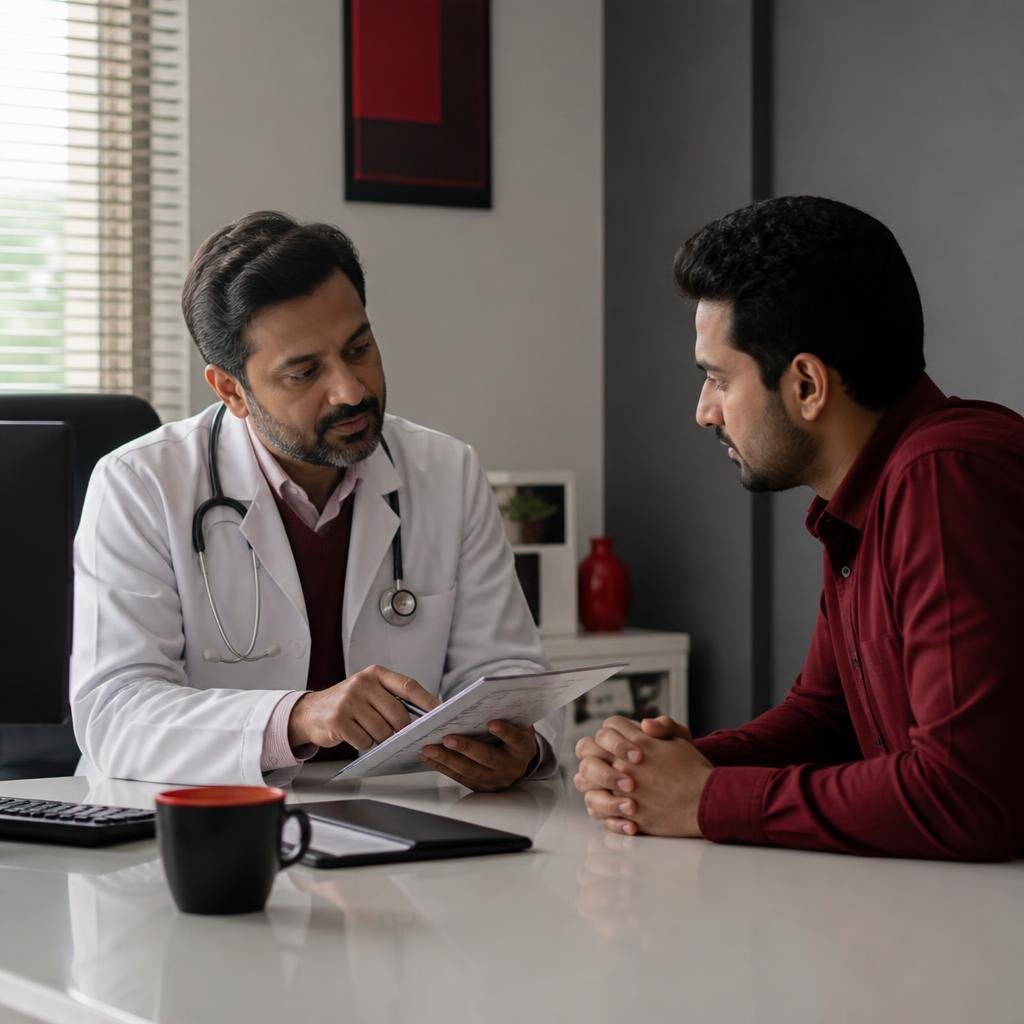
Tell Dr. Yuvraj Monga’s HIV and STD consultation team what you need help understanding. Call for a private conversation or start on WhatsApp with a short summary. Diagnosis, prescriptions and treatment decisions require appropriate clinical assessment.
For emergencies, call 112 or use the nearest emergency department. Private support and public services remain different routes of care.